Electrophoretic Coating Process vs Powder Coating Process: A Complete Comparison
A comprehensive guide for industrial manufacturers seeking superior surface treatment solutions and operational efficiency.
Understanding the Modern Finishing Landscape
In the competitive world of industrial manufacturing, choosing the right surface finishing technology is a critical decision that impacts product longevity, aesthetic appeal, and overall production costs. Two of the most prominent methods currently dominating the market are the electrophoretic coating process and the powder coating process. While both aim to protect metal substrates from corrosion and wear, they utilize fundamentally different scientific principles and mechanical delivery systems. For decision-makers at firms like TIMS, understanding the nuance of the electrophoretic coating process vs powder coating process is essential for optimizing high-volume production lines for appliances, automotive components, and architectural hardware.
The electrophoretic coating process, often referred to as E-coating, relies on an electrochemical immersion technique where charged particles are deposited onto a conductive substrate. On the other hand, the powder coating process utilizes electrostatic spray technology to apply dry resin powder which is then thermally cured to form a hard finish. This guide provides a deep dive into these technologies, analyzing their efficiency, environmental impact, and specific application scenarios to help you determine which system aligns with your facility's strategic goals and quality standards.
Core Features of the Electrophoretic Coating Line
The electrophoretic coating process is celebrated for its exceptional material utilization rate. Unlike traditional spray methods where overspray can lead to significant waste, E-coating operates within a closed-loop immersion tank. The paint particles that do not deposit on the workpiece are filtered and returned to the system, achieving utilization rates often exceeding 95%. This makes it a highly cost-effective solution for large-scale operations. Furthermore, the immersion nature of the process ensures that even the most complex geometries, including internal cavities and sharp edges, receive a perfectly uniform coating thickness. This is particularly vital for components like automotive frames and heat pump tanks manufactured by TIMS, where internal corrosion resistance is a primary requirement.
Beyond material savings, the electrophoretic coating process is a hallmark of high-quality finishing. It produces a dense, durable film with precisely controlled thickness, usually ranging from 15 to 30 microns. Because the process is self-limiting—once the coating reaches a certain thickness, the electrical resistance increases and stops further deposition—it eliminates the risk of "runs" or "sags" commonly found in liquid spray applications. Additionally, the process is environmentally friendly, characterized by low VOC emissions and a reduced carbon footprint, aligning perfectly with modern green manufacturing standards and international environmental regulations like ISO 12944.
The Versatility of the Powder Coating Process
The powder coating process has become an industry standard for products requiring thick, protective, and decorative finishes. Utilizing advanced electrostatic technology, the system sprays dry powder particles that are negatively charged toward a grounded workpiece. This creates a strong attraction that allows the powder to wrap around the part, providing excellent coverage. The powder coating process is particularly advantageous when a thicker film (typically 60 to 120 microns) is required for heavy-duty protection against impact, chemicals, and UV exposure. It is the preferred choice for outdoor furniture, architectural panels, and home appliance casings where aesthetic texture and color variety are paramount.
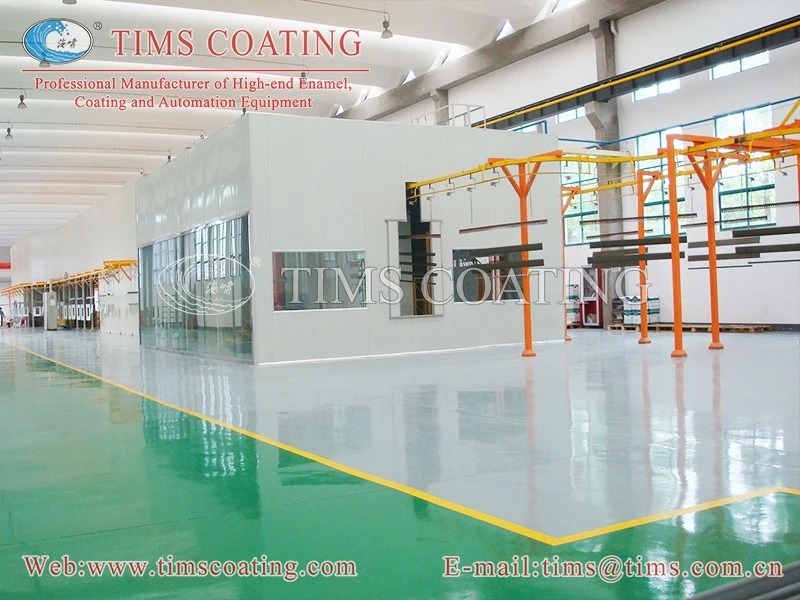
One of the standout benefits of the powder coating process is its operational simplicity and the ability to produce a "finished" look in a single pass. TIMS provides automated powder coating lines that integrate precision spray booths and high-efficiency curing ovens, reducing the need for multiple layers of primer and topcoat. While it may struggle with deep internal recesses compared to E-coating, its ability to provide a wide array of finishes—from high-gloss to matte and sand-textures—makes it incredibly versatile. Furthermore, the recovery systems in modern powder lines can recycle up to 98% of oversprayed powder, maintaining a high level of efficiency and sustainability for high-volume manufacturers.
Comparison: Electrophoretic Coating Process vs Powder Coating Process
When evaluating the electrophoretic coating process vs powder coating process, several key differentiators emerge. First is the process principle: E-coating is an electrochemical immersion process, while powder coating is a mechanical/electrostatic spray process. This difference dictates their coverage capabilities. E-coating is superior for complex parts with hidden internal surfaces, as the liquid bath reaches every nook and cranny. Conversely, powder coating is excellent for exterior surfaces where a thicker, more "premium" feel is desired. In terms of production speed, E-coating lines often offer higher throughput for small-to-medium parts because the immersion time is relatively short and the entire rack of parts is coated simultaneously.
Another critical factor in the electrophoretic coating process vs powder coating process debate is the environmental and energy footprint. E-coating systems generally operate at lower voltages and can be integrated with advanced wastewater treatment systems to minimize liquid discharge. Powder coating lines, while VOC-free, require significant energy for the curing ovens to melt the powder into a continuous film. However, TIMS has innovated in this area by introducing IoT-enabled energy recovery systems in their curing ovens, which reduces gas consumption by up to 20%. Ultimately, the choice depends on whether your priority is total surface protection (E-coating) or exterior durability and aesthetic flexibility (Powder Coating).
Strategic Application and Industry Insights
In practical industrial application, many manufacturers no longer view the electrophoretic coating process vs powder coating process as an "either/or" scenario, but rather as complementary technologies. In the automotive industry, for instance, a "duplex" system is common: the vehicle chassis first undergoes the electrophoretic coating process to ensure deep-seated corrosion protection, followed by a powder coating layer for aesthetic color and UV resistance. This combination leverages the strengths of both processes to create a product that can withstand the harshest environments for decades. TIMS specializes in designing these hybrid turnkey solutions, ensuring that each stage of the production line is synchronized for maximum efficiency.
For manufacturers of large industrial workpieces or architectural cladding, the sheer scale of the project often dictates the technology. Large-scale electrophoretic tanks require significant initial investment in chemicals and infrastructure, making them ideal for high-volume, standardized parts. Powder coating, however, offers more flexibility for batch processing different colors and textures on a single line. By analyzing the specific throughput requirements and substrate materials—whether carbon steel, aluminum, or cast iron—TIMS engineers provide tailored configurations that optimize the coating cycle and reduce the total cost of ownership for our global clientele.
The TIMS Edge: Innovation in Coating Technology
As a leading global manufacturer, TIMS provides end-to-end solutions for both the electrophoretic coating process vs powder coating process. Our expertise lies in integrating AI-powered controls and robotic automation into every production line. Whether you require a high-capacity powder coating production line or a specialized electrophoresis line for compressors, our systems are engineered for reliability and precision. We pride ourselves on our proprietary "Ultra-Flexible Production" technology, which allows a single line to handle multiple product models simultaneously, reducing initial investment costs by up to 50%.
Our commitment to sustainability is reflected in our patented waste heat recovery systems and closed-loop filtration units. TIMS does not just sell machinery; we deliver comprehensive turnkey solutions that include factory layout design, professional installation, and lifetime technical support. By choosing TIMS, you are partnering with an industry leader that understands the intricate technical balance of the electrophoretic coating process vs powder coating process and is dedicated to boosting your productivity and product longevity.
Frequently Asked Questions
Q1: What are the primary differences in the electrophoretic coating process vs powder coating process?
The primary difference lies in the application method: E-coating uses a liquid immersion bath with electrical charges to deposit paint, ensuring 100% coverage even in complex internal areas. Powder coating uses electrostatic spraying of dry resin for a thicker, more durable exterior finish. E-coating is better for corrosion protection of hidden surfaces, while powder coating offers superior aesthetic variety and impact resistance.
Q2: Which is more cost-effective: the electrophoretic coating process vs powder coating process?
For high-volume production of complex parts, the electrophoretic coating process is often more cost-effective due to its extremely high material utilization rate (95%+) and automated nature. However, for smaller batches or products requiring frequent color changes, the powder coating process offers lower setup costs and greater operational flexibility.
Q3: How do the environmental impacts of the electrophoretic coating process vs powder coating process compare?
Both are considered "green" compared to traditional liquid painting. Powder coating is VOC-free and produces almost zero waste. The electrophoretic coating process uses water-based resins with very low VOCs and utilizes closed-loop recycling for the paint, making both processes highly compliant with modern environmental standards.
Q4: Can I use both the electrophoretic coating process vs powder coating process on the same part?
Yes, this is known as a duplex coating. Many high-end manufacturers use E-coating as a primer for its exceptional adhesion and corrosion resistance, followed by a powder coating topcoat for color and additional protection. This hybrid approach provides the best of both worlds.
Q5: Which industries prefer the electrophoretic coating process vs powder coating process?
The electrophoretic process is dominant in the automotive, appliance (oven interiors), and heavy machinery industries. The powder coating process is widely used in furniture, architectural cladding, household electronics, and any application where exterior aesthetics and durability are the top priority.
Conclusion
Deciding between the electrophoretic coating process vs powder coating process requires a careful analysis of your product's geometry, durability requirements, and production volume. At TIMS, we provide the expertise and advanced equipment necessary to implement either technology—or a combination of both—to ensure your manufacturing line operates at peak efficiency.